 Find a Doctor
 Locations
  Services

 Print This Page
 Early Detection of Lung Cancer: The Role of Low-Dose CT Scans and Prevention
Medically Reviewed by Vinod K. Jona, MD
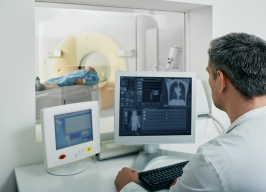
Detecting lung cancer at an early stage makes a life-changing difference for patients. Dr. Vinod Jona, a McLeod Pulmonologist, explains how lung cancer screenings with low-dose CT scans and the McLeod Healthy Lungs Initiative are saving lives and strengthening care for patients across the region.
The Power of Early Detection
“What we do with the lung cancer screening program is strive to find lung cancer at an early stage,” says Dr. Jona. “Treatment options are much better and survival rates are higher if we detect lung cancers at earlier stages.”
Dr. Jona emphasizes that the program is about more than just the scan. “It also involves smoking cessation, education about COPD, and the importance of repeat CT scans,” he notes.
Inside the Healthy Lungs Initiative
The McLeod Healthy Lungs Initiative provides patients with a comprehensive care model. “It starts with education. We have a lung cancer screening navigator, a nodule navigator, and a multidisciplinary conference where we discuss the nodules we see,” Dr. Jona explains. “It’s a joint meeting that helps us make the best decisions for the patient.”
Coordinated, Team-Based Care
When a suspicious nodule is detected, a collaborative team approach ensures patients get timely, accurate answers. “It starts with CT scans, identifying the nodule, and then biopsies — whether that’s bronchoscopy, robotics, or a CT-guided biopsy,” says Dr. Jona.
Not all nodules are cancerous. “In fact, 90% of the nodules are benign. So, it’s very important to identify which nodules are suspicious and investigate those, while leaving the benign nodules alone,” he adds.
To do this well, multiple specialists meet together in the Lung Nodule Multidisciplinary Conference. “It involves pulmonology, thoracic surgery, oncology, radiation oncology, radiology, and our lung cancer navigators — four or five specialties in the same room, talking about the patient.”
Involving Patients and Families
The McLeod Healthy Lungs Initiative also brings families into the decision-making process. “We encourage family members to be involved,” Dr. Jona explains. “The patients and families can attend the conference virtually — even if a loved one is in another state — and they can ask us questions. Rather than having to see four or five different doctors, they get one coordinated answer and one treatment plan.”
Reducing Your Risk
While screenings are vital, prevention remains key. “The most important thing is to identify the risk factors,” says Dr. Jona. “Family history of COPD, smoking, exposure to dust or workplace chemicals — these all matter. Smoking cessation is huge. Education and awareness are the most important parts.”
-
McLEOD REGIONAL MEDICAL CENTER FLORENCE
843-777-2000 -
McLEOD DARLINGTON
843-777-1100 -
McLEOD DILLON
843-774-4111 -
McLEOD LORIS
843-716-7000 -
McLEOD SEACOAST
843-390-8100 -
McLEOD CHERAW
843-537-7881 -
McLEOD CLARENDON
803-433-3000



-
McLEOD REGIONAL MEDICAL CENTER FLORENCE
843-777-2000 -
McLEOD DARLINGTON
843-777-1100 -
McLEOD DILLON
843-774-4111 -
McLEOD LORIS
843-716-7000 -
McLEOD SEACOAST
843-390-8100 -
McLEOD CHERAW
843-537-7881 -
McLEOD CLARENDON
803-433-3000
